Branding Guide Design Gallery
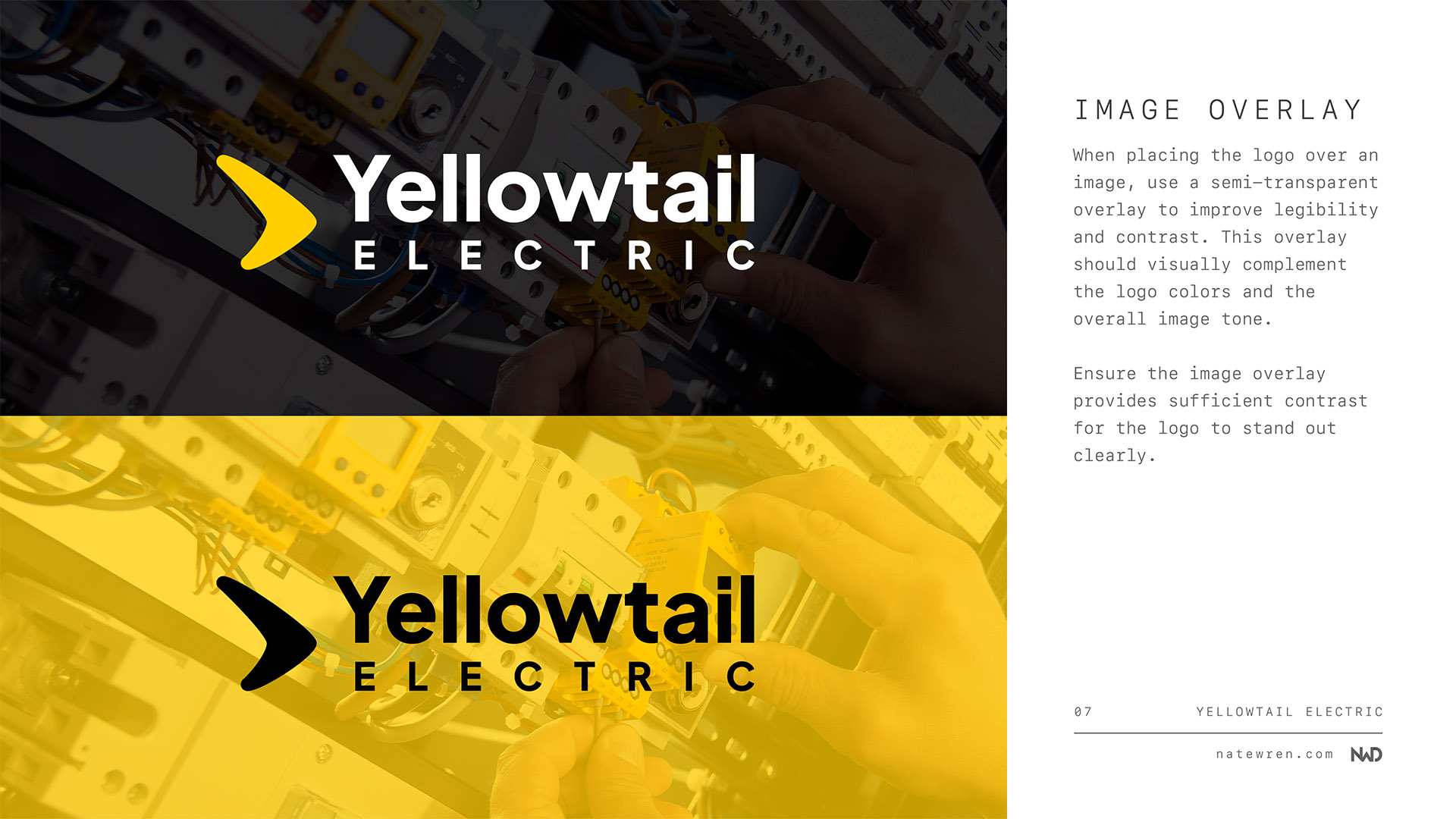
What they actually needed
Yellowtail is a licensed electrical contractor doing residential and commercial work around Temecula and the surrounding valley. Most of their business came through referrals, and the brand had to do the job a referral does not: make them look established to someone who found them cold on Google, or who drove past their van at a stoplight.
Two things came out of the first conversation and they shaped everything after it. They wanted to look permanent rather than scrappy. And whatever I designed had to work at sixty miles an hour on the side of a vehicle, because for most people that would be the first time they ever saw it.
That second constraint is the useful one. A logo that survives a van wrap will survive anything else you put it on.
Designing the mark
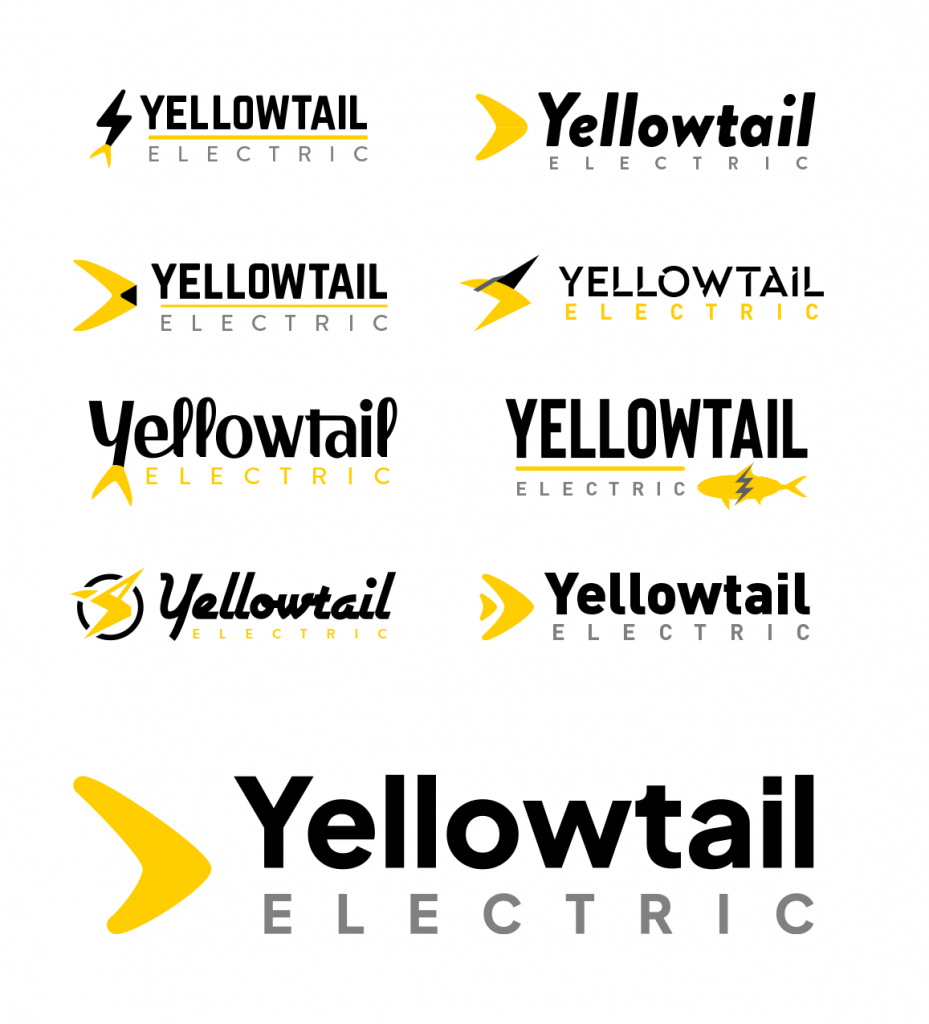
The name did a lot of the work for me. A yellowtail is a fish, so the obvious first move is to draw a fish. The problem is that a whole fish on an electrician’s van says seafood restaurant, and no amount of styling fixes that.
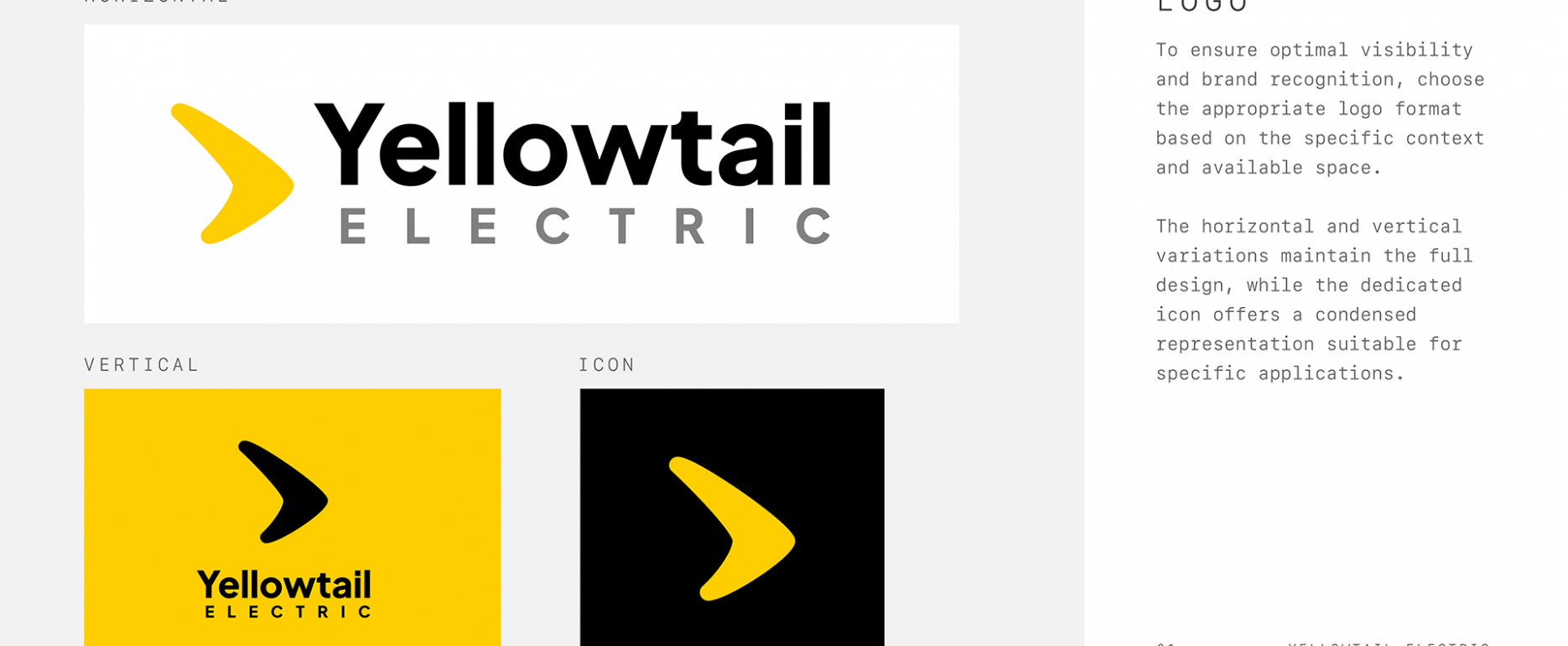
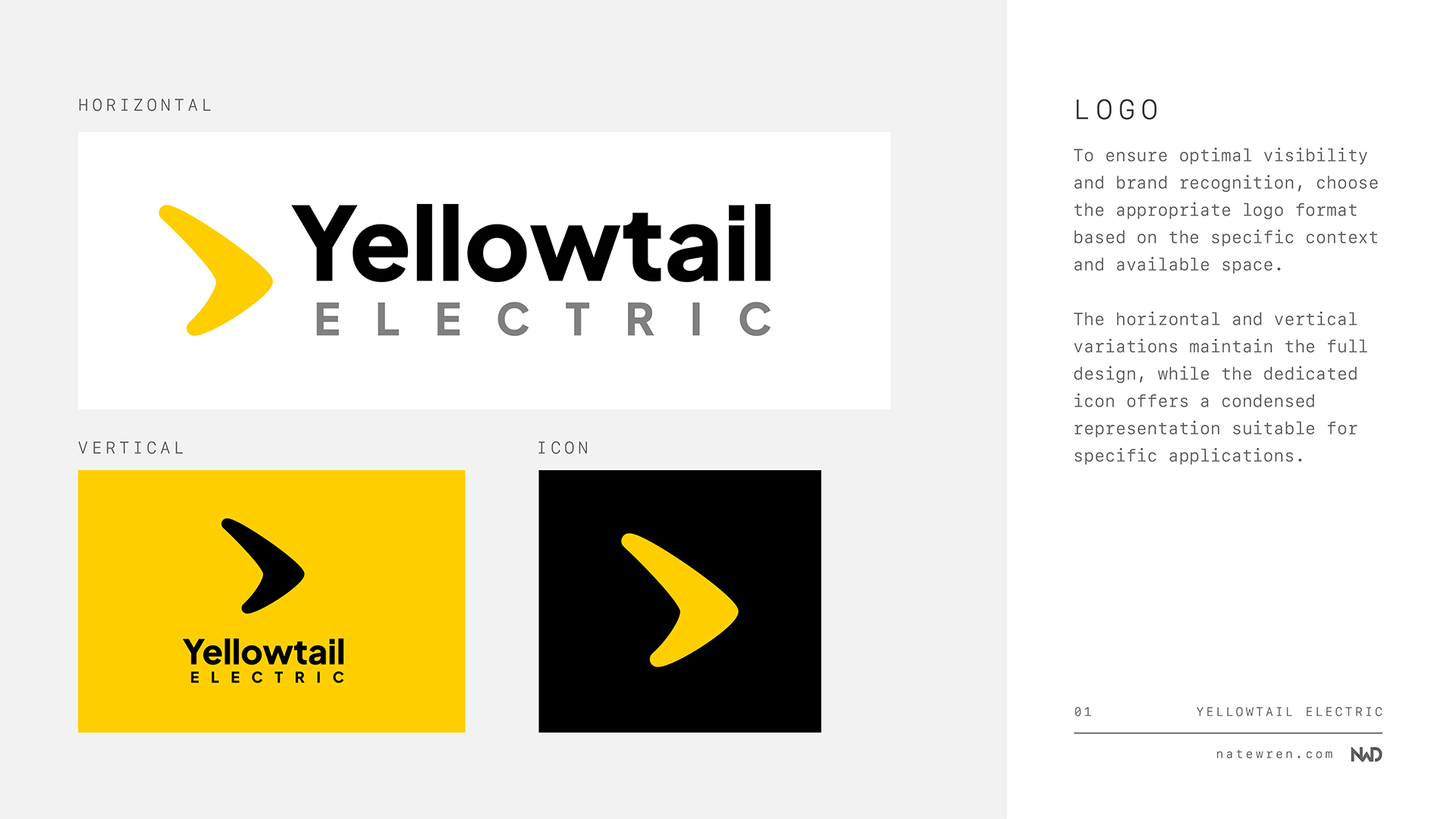
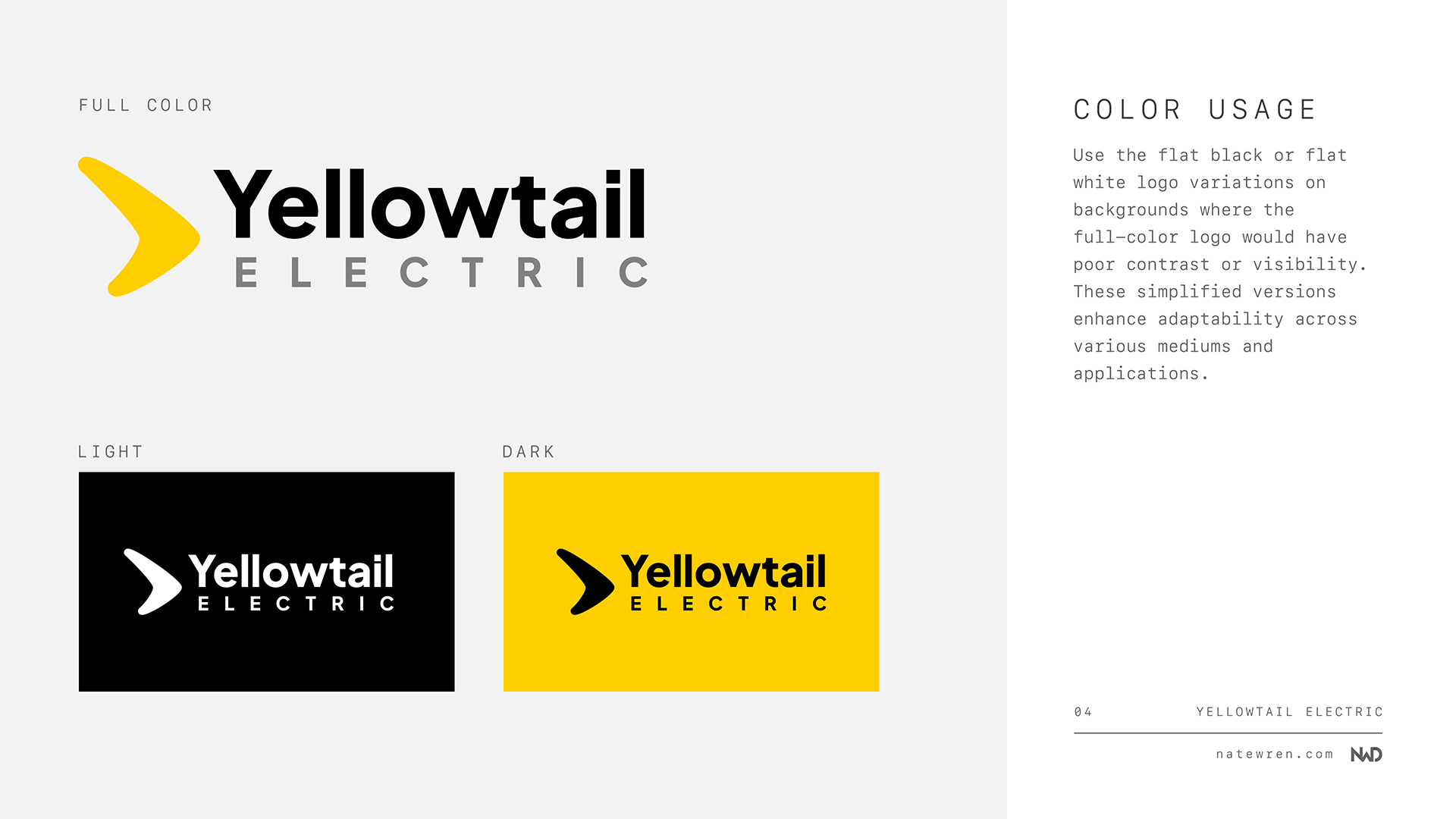
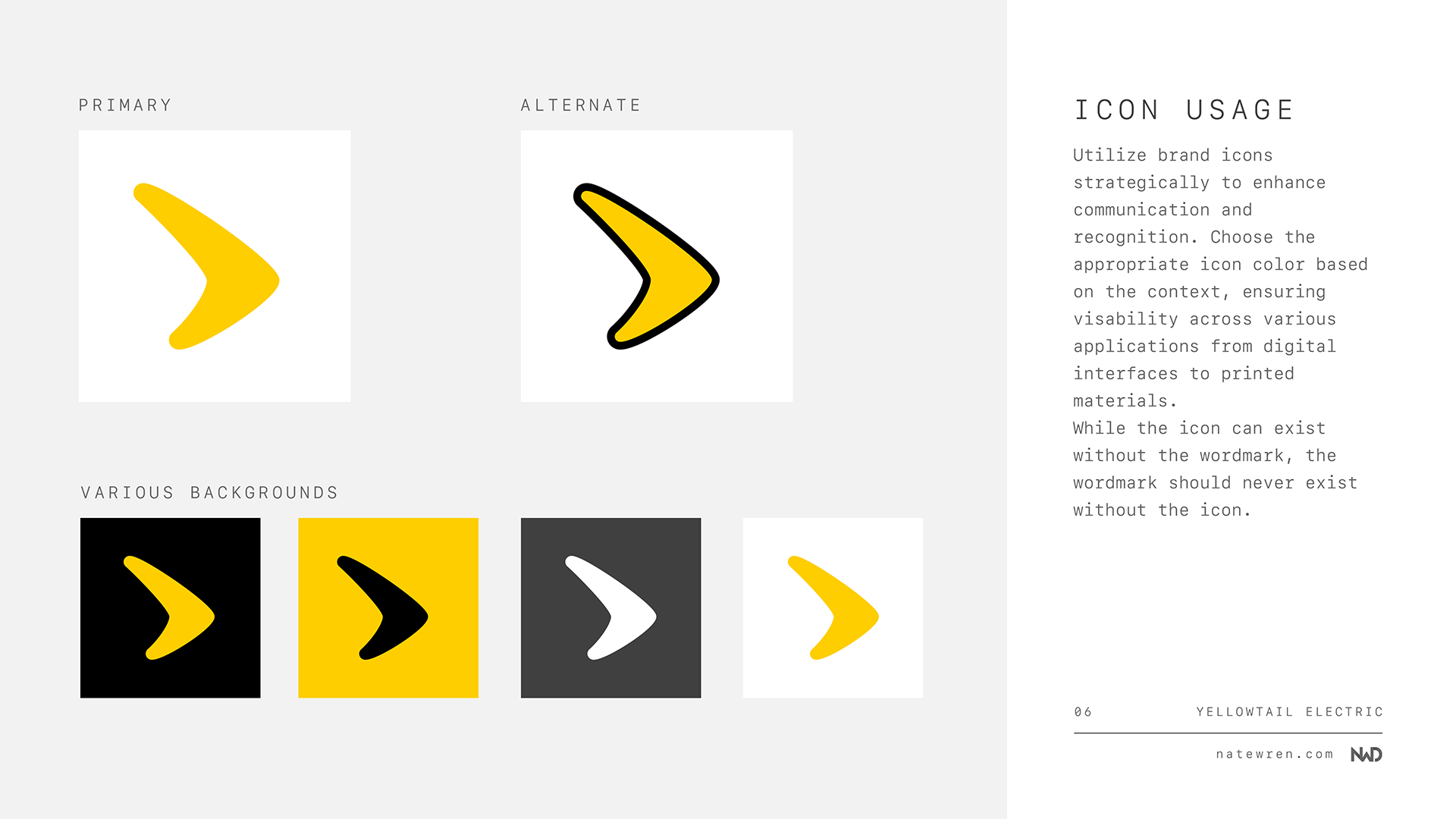
So I kept the tail and threw away the rest of the fish. The final mark is a single angular yellow shape that reads as a tail if you know the name, and as a chevron pointing forward if you do not. It works either way, which is the point. It also sits cleanly next to the wordmark at any size, holds up as a favicon, and can be cut in vinyl without losing detail. A detailed fish illustration would have failed all three of those.
I worked through a lot of directions before landing there. Here are some of the concepts that did not make it:
The palette
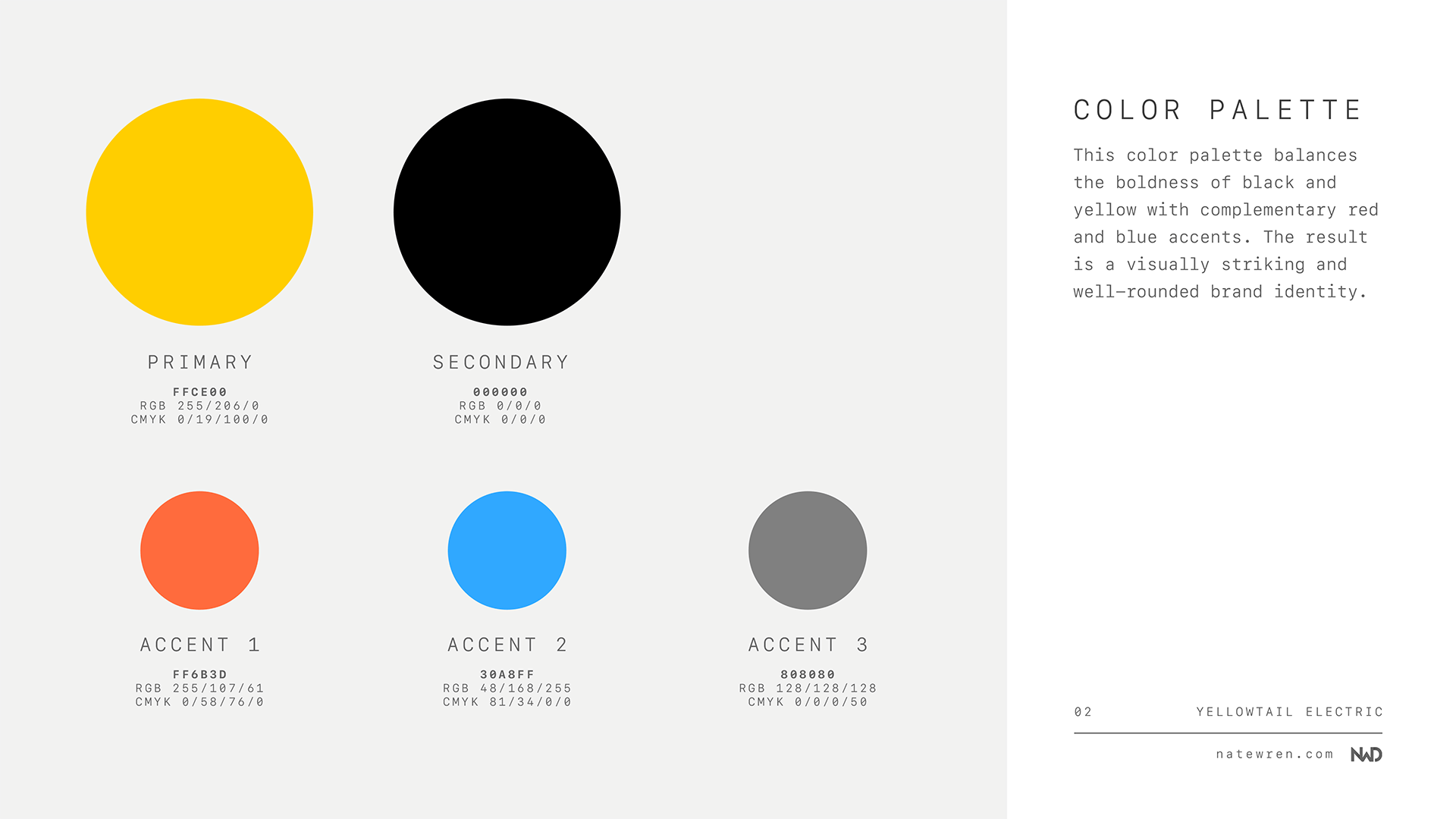
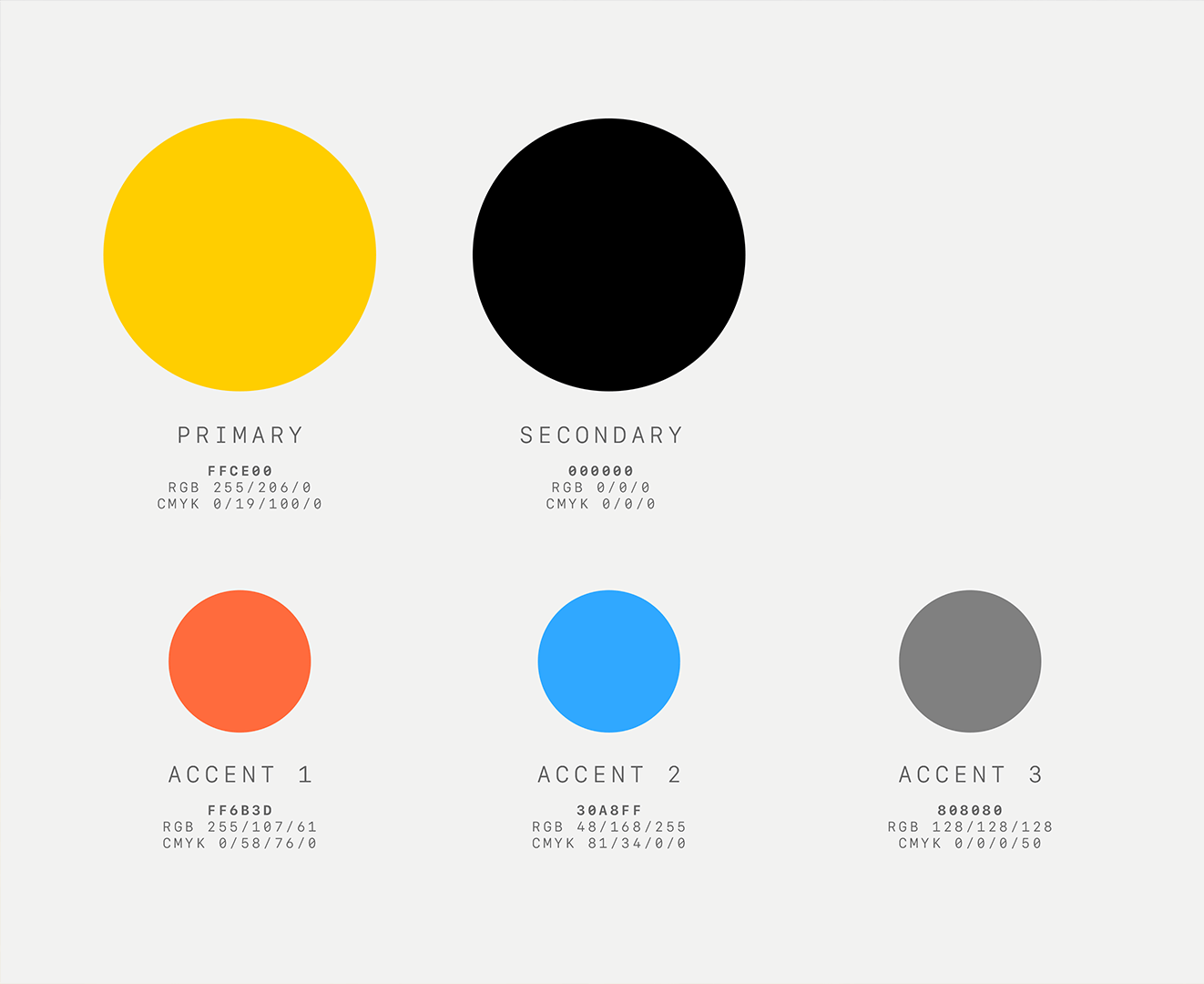
The name handed me the colour as well. The primary is #FFCE00, a saturated yellow in the same family as safety vests, hard hats, and lockout tags. People already associate that yellow with electrical work and with being careful around it, which is exactly what you want a contractor signalling before they have said a word.
Black at #000000 carries the wordmark and does most of the work in print.
Then three accents, used on the website and printed material rather than in the logo itself. An orange at #FF6B3D for warmth and calls to action, a blue at #30A8FF to give the eye somewhere to rest against all that yellow, and a mid grey at #808080 for secondary text.
Five colours, and every one of them pinned to a hex value, an RGB value, and a CMYK breakdown. That last part matters more than it sounds. It is the difference between the yellow on the van matching the yellow on the business card and the two of them being visibly off from each other.
Typography
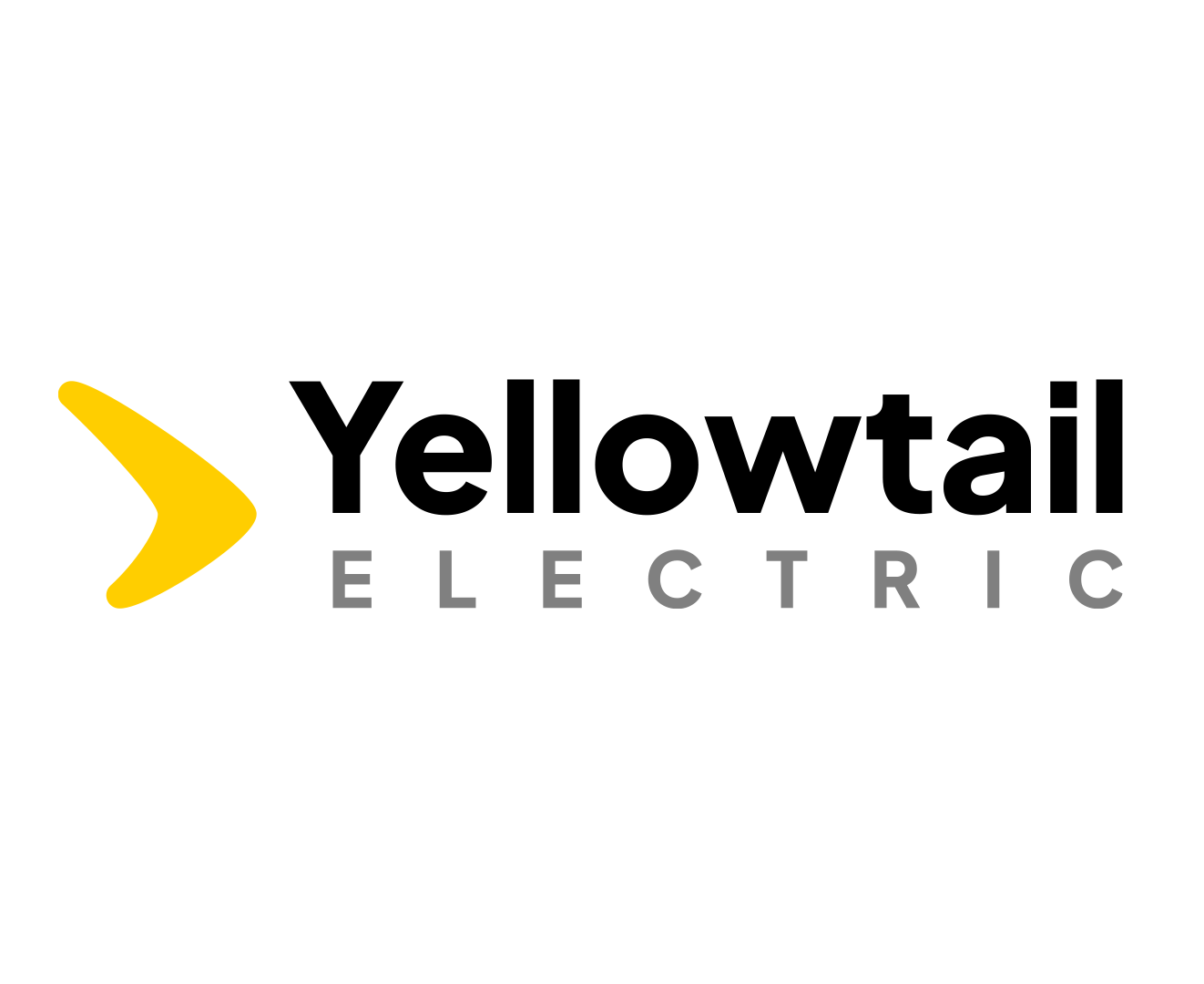
The wordmark is a heavy geometric sans. Wide, solid, and still legible as vinyl on a moving vehicle. ELECTRIC sits underneath it letterspaced in grey, which keeps the name dominant while making sure nobody has to guess what the company does.
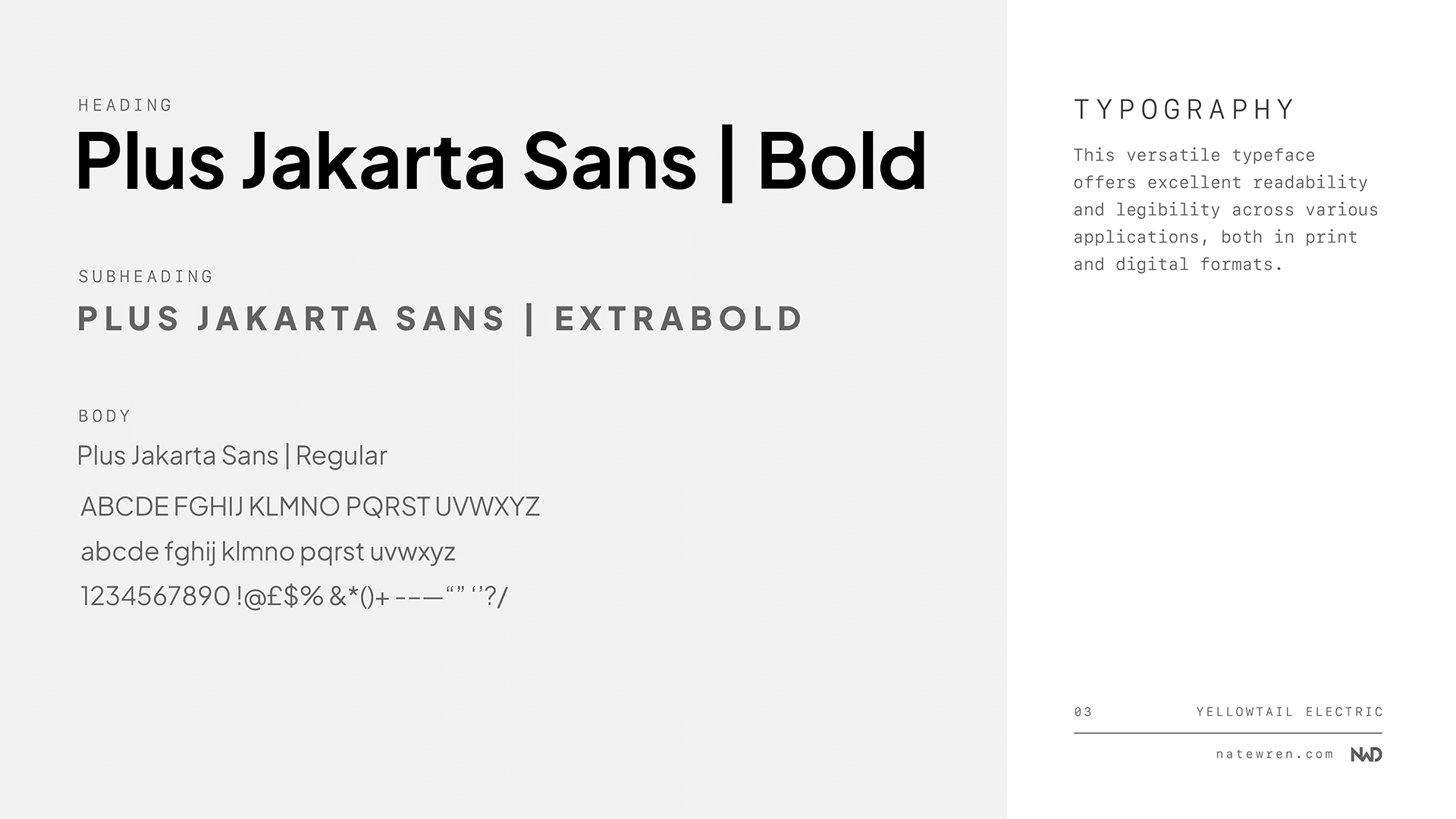
For everything around the logo I went monospace. I trialled a few, including IBM Plex Mono and SF Mono, and the reasoning was simple: a monospace face reads as technical and measured. It looks like something off a meter, a spec sheet, or a panel schedule. For an electrician that is the right association to be making, and it gives the brand a second voice that is clearly not the logo shouting again.
The website uses Plus Jakarta Sans for body copy, because monospace is a great accent and a poor choice for a long service page.
Putting it on things
A logo is only a theory until it goes on something real. Most of the hours on this project went into the applications rather than the mark itself, and that is usually where a brand either works or quietly falls apart.
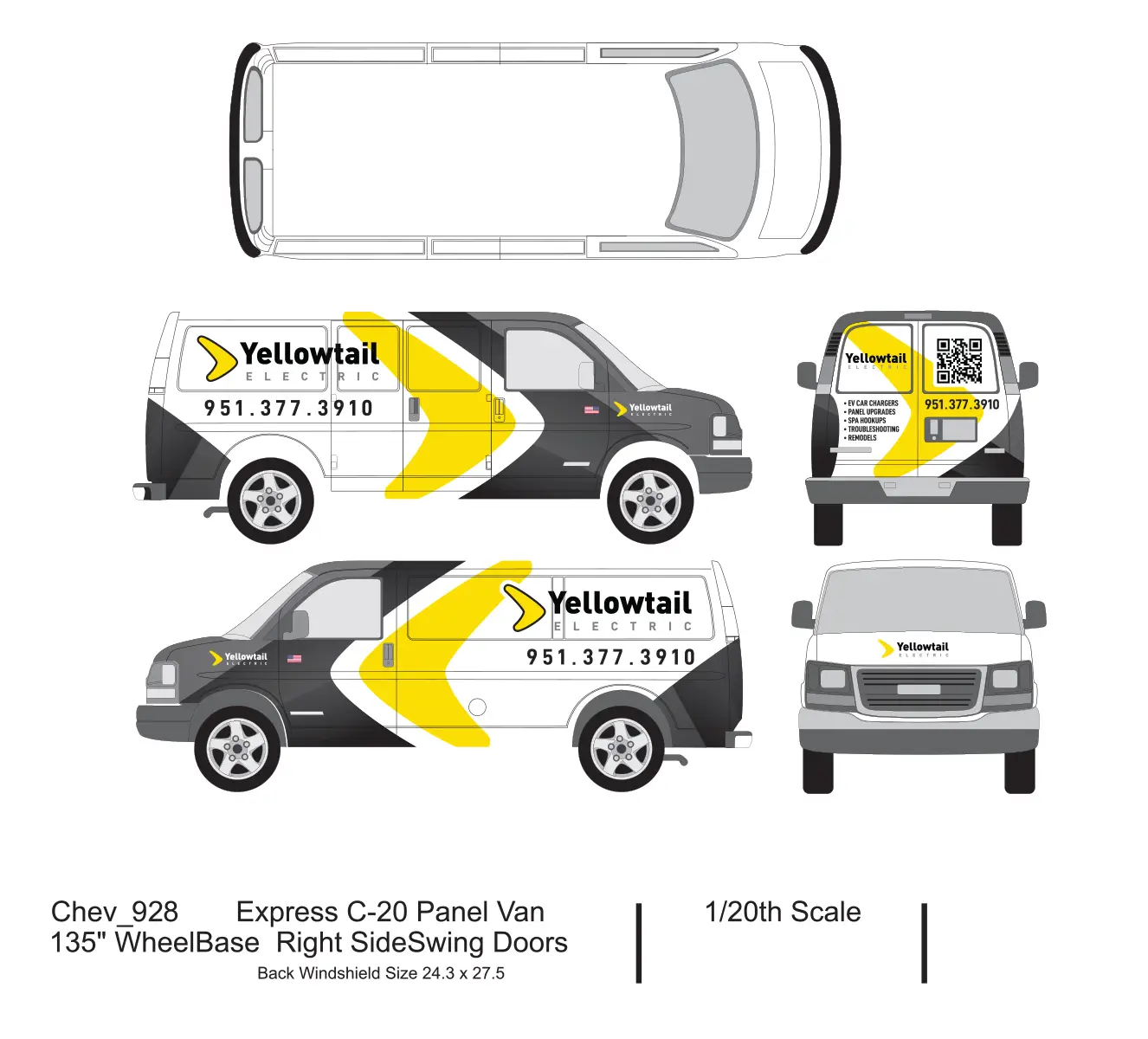
The van wrap. Seven versions on a Chevrolet template before we settled on one. Every decision came back to legibility at distance and at speed, which in practice means the mark large, the phone number large, and almost nothing else. The temptation on a wrap is to list every service. Resisting that is most of the job.
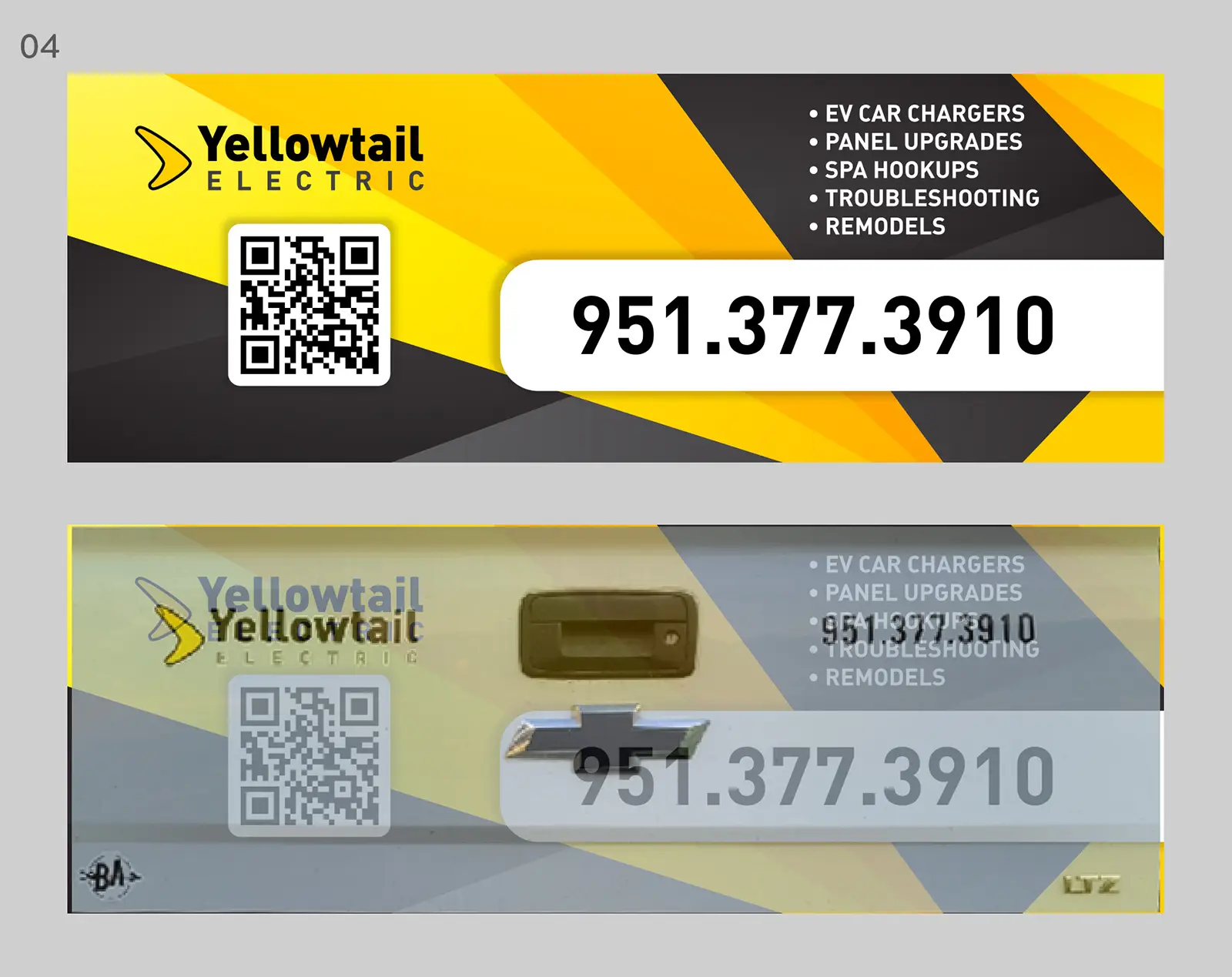
Tailgate graphics. Same problem, a third of the space.
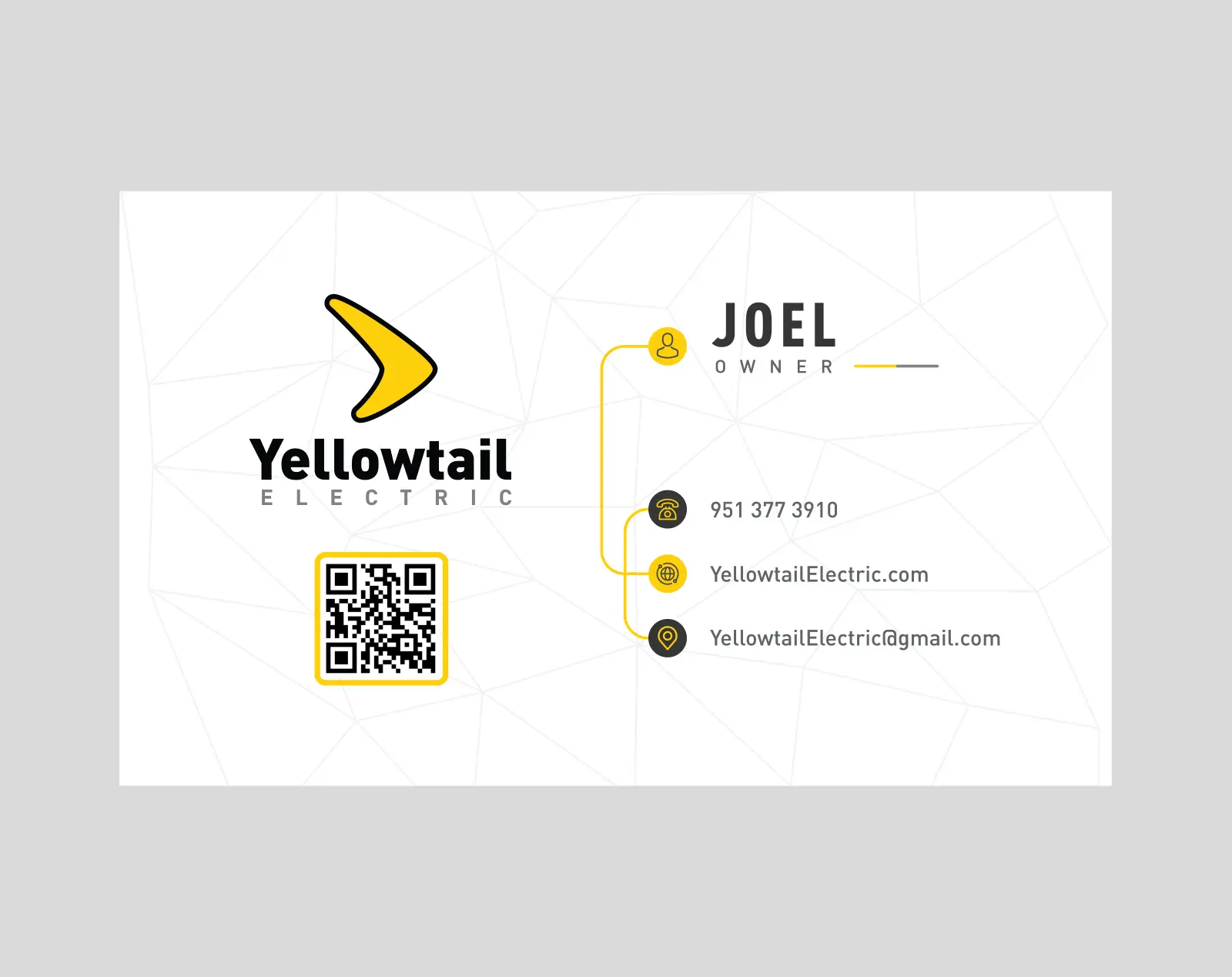
Business cards, with a QR code so a homeowner can reach the site without typing anything on a ladder.
A service and product catalog for commercial clients.
The California contractor licence number, which a licensed electrician is required to display. I set it in DIN and built it as its own reusable asset, correctly proportioned, so it could drop onto the van, the cards, or the site without anyone rebuilding it from scratch each time.
The branding guide
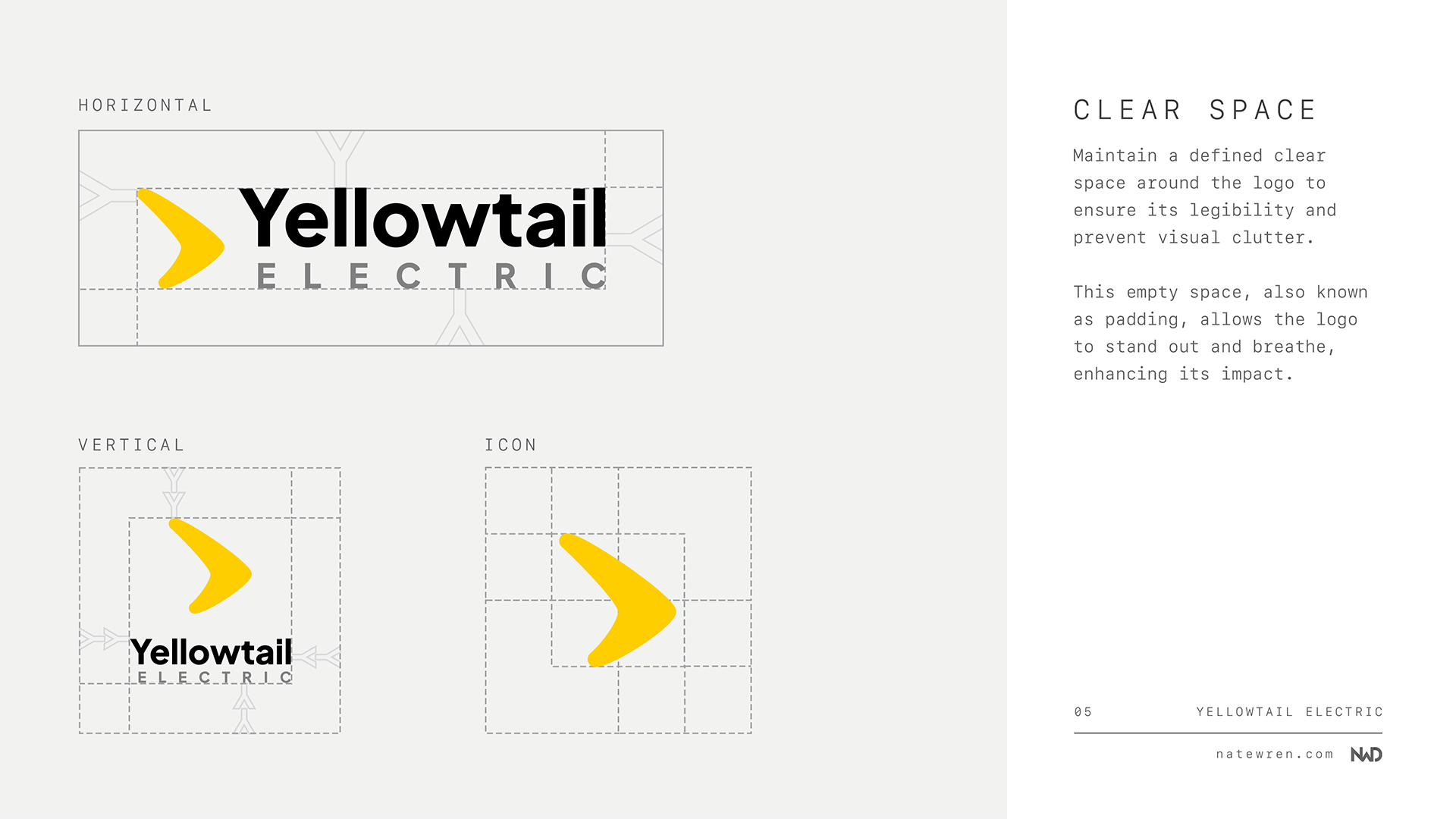
All of it went into a branding guide. Colour codes in hex, RGB, and CMYK. Logo spacing and minimum sizes. The font files. Rules for what not to do to the mark, which in my experience is the section that actually gets opened.
The point of a guide for a company this size is not ceremony. It is that the sign shop, the print shop, and whoever builds the next thing all produce something that matches, without me needing to be in the loop for every job. That is worth more to a growing contractor than another round of logo revisions.
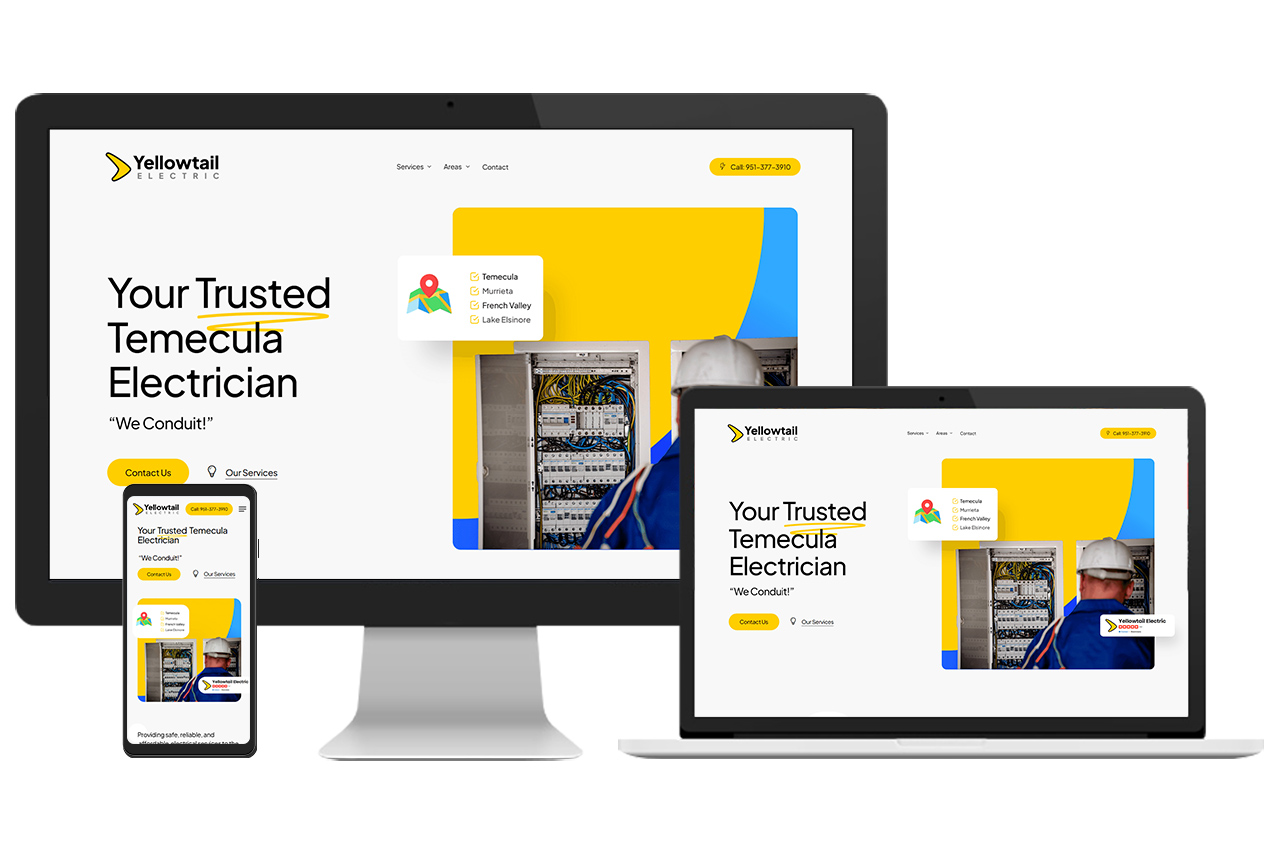
Yellowtail Electric’s website
I built their site as well, at yellowtailelectric.com. Having the brand finished first made the build noticeably faster, because every colour and type decision was already made before I started laying out pages. You can read more about that in the website portfolio piece.
Thinking about a rebrand?
If you run a business and your logo has never quite had a system around it, I would like to hear about it. Get in touch through my contact form and tell me what you are working with. Happy to talk through what an identity would involve, with no obligation either way.